
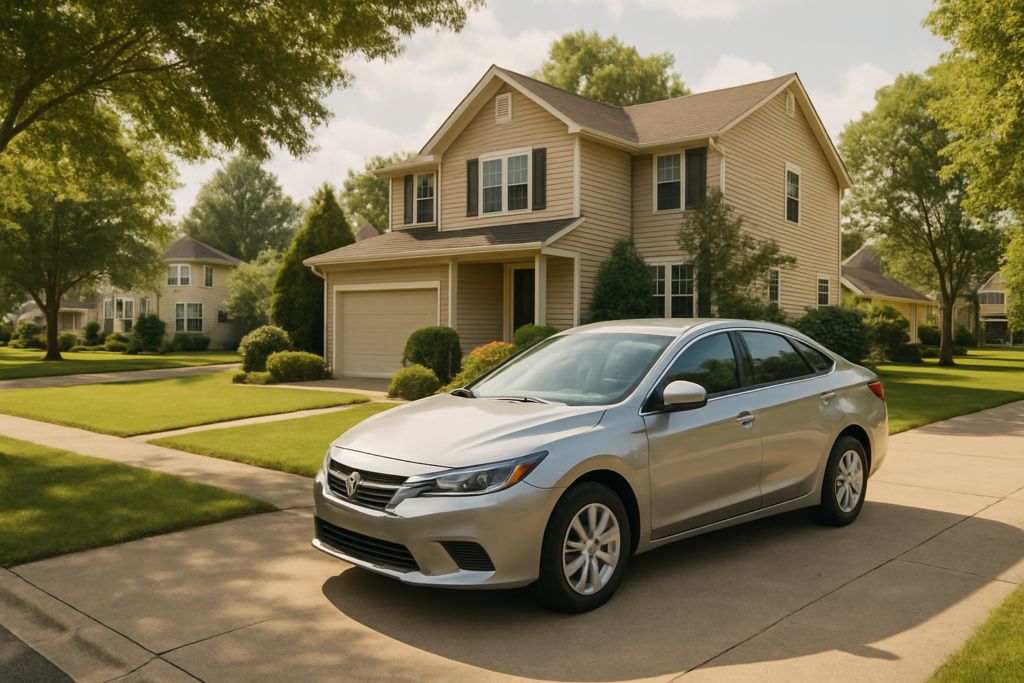
Here’s a number your insurance company hopes you never calculate: if your collision and comprehensive coverage costs $900 a year and your car is worth $9,000, you’re paying 10% of the car’s value annually just to protect it. After your deductible, the maximum payout you’d ever see is maybe $8,000 — assuming the car is totaled. That’s not protection. That’s an expensive bet with mediocre odds.
This isn’t an abstract scenario. A 2019 Honda Civic, Toyota Camry, or similar mainstream sedan sits right in this range today — worth roughly $9,000 to $12,000 depending on mileage and condition, while collision premiums on those vehicles often run $600 to $1,200 per year depending on your location, driving history, and deductible. The math deserves more scrutiny than most people give it.
Let me be direct: if you’ve got $12,000 sitting in a savings account and your car is worth under $10,000, you should seriously consider dropping collision and comprehensive coverage — and putting that premium money to better use.
What Collision and Comprehensive Actually Cover
Before we run the numbers, a quick vocabulary check. Collision coverage pays for damage to your car when you’re involved in an accident with another vehicle or object. Comprehensive pays for everything else: theft, vandalism, hail, flooding, a deer jumping onto your hood at 60 mph.
Liability coverage — which covers damage you cause to other people and their property — is legally required in almost every state. Don’t touch that. We’re not talking about dropping liability. We’re talking about the optional coverages that protect your own vehicle.
Both collision and comprehensive come with a deductible — typically $500 to $1,000. That’s the amount you pay out of pocket before the insurance kicks in. If your car is worth $9,000 and you have a $1,000 deductible, the maximum you’d collect from a total-loss claim is around $8,000 (market value minus deductible, roughly speaking). A partial repair might net you even less.
The 10% Rule — and What It Actually Means
Financial planners have long used a rule of thumb: if your annual collision and comprehensive premium exceeds 10% of your car’s actual cash value, the coverage probably doesn’t make financial sense to keep.
The logic is straightforward. Insurance exists to protect you from financial catastrophe — losses so large you couldn’t absorb them without serious hardship. A $9,000 car isn’t that. It’s a meaningful but manageable amount. If you have savings, you can self-insure against that loss.
Here’s what the 10% calculation looks like for a 2019 vehicle:
- Car value: $9,000 (private party value, based on current market)
- Annual collision + comprehensive premium: $900
- 10% of car value: $900
- Verdict: Right at the threshold — worth a serious look
If you’re paying $1,200 per year for collision and comp on that same car? You’re paying 13% of the car’s value annually. That’s a bad deal by almost any measure.
Get your own number by pulling your current declarations page and checking what you’re paying just for collision and comprehensive — not your total premium, not your liability, just those two coverages. Websites like Kelley Blue Book or Edmunds can give you a reasonably accurate private-party value for your specific car.
The Savings-Account Factor Changes Everything
The $12,000 in savings isn’t a footnote — it’s the whole argument.
The reason people carry collision coverage on older cars is usually fear: what happens if my car is totaled and I have nothing to replace it with? That’s a legitimate concern for someone with $800 in a checking account. It’s much less legitimate for someone who has a real emergency fund.
If you drop collision and comprehensive on a car worth $9,000, and that car gets totaled or stolen next week, you lose $9,000. That’s painful. But you still have $3,000 left in savings after replacing it with something comparable. You haven’t been financially ruined. You’ve experienced exactly the kind of manageable setback that savings accounts exist to absorb.
Compare that to keeping the coverage: you pay $900 per year for five years. That’s $4,500 in premiums. If the car survives those five years without a claim — which, statistically, is the most likely outcome — you’ve paid $4,500 to protect yourself against a loss that didn’t happen. If you had invested that $900 annually instead, it compounds into meaningful money.
The insurance company doesn’t offer collision coverage as a favor. They price it to make money over the long run. On a car that’s steadily depreciating in value, the odds keep shifting against you with each passing year.
What to Do With the Premium Savings
Let’s say dropping collision and comprehensive saves you $80 per month — a conservative estimate for many drivers in mid-cost states. Over 12 months, that’s $960.
Option one: bulk up your car repair sinking fund. This is where the math gets genuinely useful. A dedicated car repair fund is the smarter version of collision insurance — you’re building a self-funded pool specifically for vehicle expenses. A 2019 car with 70,000+ miles will need brakes, tires, and eventually more significant work. Keeping $2,000 to $3,000 earmarked for car repairs eliminates the need for a credit card every time something breaks, without paying premiums for coverage you may never use.
Option two: redirect it toward a vehicle replacement fund. If you’re driving a car that’s already approaching its end-of-life range, you’re going to need to replace it eventually. Saving $80 per month while you drive the current car means you’ll have $5,000 to $7,000 toward a replacement over the next few years — reducing how much you need to finance.
Option three: put it toward high-interest debt or investments. An extra $80 per month applied to a credit card balance at 22% APR saves real money. Applied to a Roth IRA consistently, it grows into something meaningful over time.
When You Should NOT Drop Coverage
This isn’t a universal answer. Several situations make keeping collision and comprehensive the right call:
You have a loan or lease on the car. If you financed the vehicle, your lender almost certainly requires you to carry collision and comprehensive coverage until the loan is paid off. This isn’t optional. Check your loan agreement before you change anything.
Your savings are thinner than they look. If that $12,000 is also your emergency fund, your job is borderline, or you’re carrying high-interest debt, losing a car and $9,000 simultaneously could be genuinely destabilizing. The math works when you have a real financial cushion — not when savings is doing double and triple duty.
You live somewhere with high theft or severe weather risk. Comprehensive coverage is the piece that protects against theft and weather events. In a high-crime ZIP code or an area with frequent hail storms, the calculus changes. A $500/year comprehensive-only policy in a hail-prone area might be worth keeping even if you drop collision.
The car is worth more than you think. Truck and SUV values held unusually well through recent years. A 2019 truck might still have a private-party value well above $15,000 to $20,000. Run the actual number — don’t guess. A car worth $18,000 with a $900 collision premium is a 5% ratio, and keeping coverage there makes plenty of sense.
You can’t handle the psychological risk. This is underrated. Some people know intellectually that dropping coverage is the mathematically sound choice but will genuinely lose sleep worrying about it. If the anxiety isn’t worth the savings, keep the coverage. Financial decisions aren’t purely mathematical — they’re also about what lets you function without stress.
How to Actually Check Your Number Right Now
Here’s the three-step process:
First, pull your insurance declarations page. Most insurers have this in their app or online portal. Look specifically at what you’re paying for collision and comprehensive — not your total premium. In many cases, these two coverages represent 40% to 60% of a full-coverage premium.
Second, check your car’s private-party value on Kelley Blue Book or Edmunds. Use honest mileage and condition ratings. Private-party value is the right number here — not trade-in value, which is lower.
Third, divide annual collision + comprehensive premium by car value. If the result is 10% or higher — or approaching it and trending that direction as the car depreciates — you’re paying too much for coverage on a car that’s going to be worth even less next year.
While you’re doing this insurance review, it’s also worth comparing your liability limits and thinking about whether an umbrella policy makes sense at your net worth level. Umbrella coverage becomes more relevant as your assets grow — it’s the overlooked piece that protects what you’ve accumulated, not just your car.
The Call on the 2019 Car With $12,000 Saved
Based on the scenario: yes, drop collision. Probably drop comprehensive too, unless you’re in a high-theft or high-weather area and can separate that premium out.
Here’s why this is the right call in most cases at this car value and savings level. The maximum financial benefit from keeping the coverage — a total-loss payout — is roughly $8,000 to $9,000 after your deductible. You already have $12,000 saved. You’re paying $900-plus per year to protect yourself against a loss you could survive without insurance. That’s not a good trade.
The best thing you can do with the money you save on premiums is make sure you actually have it somewhere when you need it. Don’t let it evaporate into daily spending. Set up a specific car fund — even $50 per month directed into a high-yield savings account — and name it. That psychological trick of labeling money works. It sits there, earns interest, and handles the brakes, the tires, and eventually the down payment on the next car.
If you’re also carrying a car loan with a higher-than-ideal interest rate, the math on paying off a 6.9% car loan early is worth running alongside this decision — reducing your loan balance and dropping coverage once you own the car free and clear is a particularly clean two-step.
One More Step: Actually Get the Quote First
Before you make any changes, call your insurer or log into your account and ask for a quote on liability-only coverage. In some cases, you can also try adjusting your deductible — raising it from $500 to $1,000 reduces the premium meaningfully even if you decide to keep the coverage.
Get the exact number. The theoretical savings in this article are based on typical premiums — your actual situation may be better or worse. Some drivers in rural areas pay $400/year for collision on a $9,000 car, which changes the math. Some urban drivers pay $1,500, which makes the case for dropping it even stronger.
Use a free tool like NerdWallet’s car insurance comparison or go direct to your insurer’s website to model out both scenarios. The actual dollar difference, in your specific situation, is the only number that matters — and it takes about five minutes to find it.
For a structured guide to thinking through insurance as part of your overall financial picture, I Will Teach You to Be Rich by Ramit Sethi covers insurance optimization as part of a broader personal finance system — practical, specific, and notably opinionated in ways that are useful. The Total Money Makeover takes a simpler stance on insurance: keep what you need, drop what you don’t, and direct the savings toward debt and then wealth. Both are worth reading if insurance decisions feel overwhelming rather than straightforward. And if you want a framework specifically for insurance and protection in a broader context, a solid personal finance reference guide covering insurance in plain language is worth having on the shelf.