
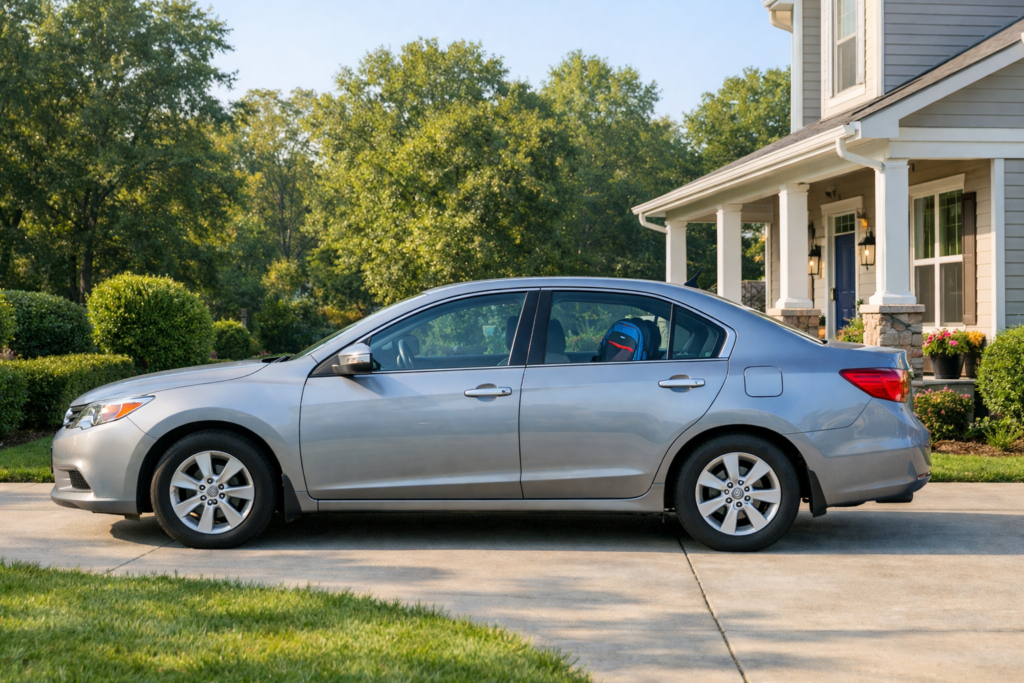
Adding a teenage driver to your car insurance policy is the single most predictable financial shock in parenting that almost no one adequately prepares for. The average increase in premium when you add an 18-year-old to a family policy runs between $150 and $250 per month — sometimes more — and if the teenager is buying their own policy independently, they’ll often pay $2,400 to $4,800 per year for basic coverage alone. This surprises people because they assume the jump will be manageable. It isn’t.
The reason is straightforward: 18-year-old drivers are statistically the highest-risk group on the road. Per mile driven, they have crash rates nearly three times higher than drivers over 25. Insurance companies aren’t being punitive — they’re pricing to the actual actuarial risk. Understanding that changes how you approach the cost. You’re not trying to argue that your teenager is different from other 18-year-olds (every parent thinks that); you’re working within a system that prices by group and finding every legitimate discount that applies to your specific situation.
What Car Insurance Actually Costs for an 18-Year-Old
The range is wide and depends on several variables: whether the teenager is on a parent’s policy or buying independently, the state you live in (insurance is regulated at the state level and costs vary enormously — Michigan has historically been one of the most expensive states; Maine and Ohio among the least), the type of car, the coverage level, and the driver’s grades and training history.
On a parent’s policy: expect $150–$250/month in premium increase in most states for adding an 18-year-old. Some states and situations land higher — $300+ is not unusual in California, Florida, or New York with a teen driver added to a policy with comprehensive and collision coverage on a newer car.
As an independent policy: the average 18-year-old buying their own coverage with state-minimum liability limits pays roughly $200–$400 per month. Full coverage on a financed car brings that higher. This is often the math that makes parents realize keeping the teenager on the family policy — even with the premium increase — is dramatically cheaper than an independent policy.
The On-Your-Policy vs. Independent Policy Decision
Keep them on your policy. Almost always. An 18-year-old buying their own coverage pays rates designed for a solo young driver with no insurance history. On a parent’s policy, they benefit from the parent’s multi-car discount, the parent’s claim-free history, and the parent’s relationship with the insurer. That combination can cut the effective rate for the teenager’s coverage in half compared to an independent policy.
The exception: if your teenager is living more than a few hundred miles away (college in another state, for instance) and driving their own car independently without regular use of the family vehicle, some insurers require them to be on a policy in the state where they’re registered. In that case, shopping for a student policy in their current state is sometimes necessary. But for teenagers still living at home or commuting locally: stay on the parent’s policy.
The Five Legitimate Ways to Actually Lower the Rate
Good student discount. Most insurers offer a 5–15% discount for full-time students with a B average or better (some require a 3.0 GPA, some a 3.5, depending on the insurer). If your teenager is a decent student, this discount is worth pursuing at every renewal. You’ll typically need to submit a transcript or letter from the school. On a policy with a $2,400 annual premium increase, a 10% good student discount saves $240/year.
Driver’s education and defensive driving courses. Many insurers discount premiums for completion of an approved driver’s education program — separate from the one required to get a license. A state-approved defensive driving course can reduce premiums by 5–10%. These courses run $25–$75 and pay for themselves in premium savings in the first month or two. Ask your specific insurer which courses they accept before enrolling; not all programs qualify for discounts with all carriers.
Telematics / usage-based insurance programs. Programs like State Farm’s Drive Safe & Save, Progressive’s Snapshot, or Allstate’s Drivewise plug into the car (or use a smartphone app) and track driving behavior — speed, hard braking, night driving, phone use while driving. Drivers who demonstrate safe habits can earn discounts of 10–30%. For teenagers who are genuinely careful drivers, this is one of the largest available discounts. The psychological side effect: teenagers who know they’re being monitored drive more carefully. Many parents find this the most valuable feature — the monitoring itself, regardless of the discount.
Put the teenager on the family’s lowest-value car. Insurance companies rate each driver against the car they’re most likely to drive. If the family has a five-year-old Honda and a newer pickup truck, assign the teenager to the Honda. Comprehensive and collision coverage on an older car with a lower book value is proportionally cheaper than on a newer vehicle. This doesn’t work if the teenager drives both cars regularly, but for families where vehicle assignment is realistic, it can meaningfully reduce the incremental premium.
Shop at every renewal. Insurance loyalty has no actuarial benefit for you — it benefits the insurer. Young driver premiums can vary by 30–40% between insurers for identical coverage. Get quotes from at least three companies at renewal each year: your current insurer, one national competitor, and one regional carrier. Regional carriers (Erie Insurance in the mid-Atlantic, Auto-Owners in the Midwest, USAA for military families) sometimes dramatically undercut the national brands on young driver pricing. The quotes are free. The savings can be $400–$800 annually on teen driver coverage.
What Coverage Level Actually Makes Sense
State minimum liability coverage is not enough. Full stop. The minimums in most states are embarrassingly low — $25,000 bodily injury per person in many states — and a serious accident can exhaust those limits in minutes of medical billing. If your teenager causes an accident and your coverage limits are hit, your personal assets may be at risk in a lawsuit.
Recommended coverage: 100/300/100 liability at minimum (that’s $100,000 per person, $300,000 per accident, $100,000 property damage) plus uninsured motorist coverage at the same limits. This costs meaningfully more than state minimums but provides real protection.
On comprehensive and collision: if the teenager is driving a car worth less than $5,000–$6,000 in market value, running the comprehensive and collision coverage numbers is worth doing. Annual comp and collision on an older car might run $600–$900. If the car is totaled, you’d collect its current market value minus your deductible. On a car worth $4,000, you might net $3,000 after a $1,000 deductible. Is $700–$900/year in premiums worth $3,000 in protection? Maybe. But it’s worth the calculation rather than automatically paying for it.
Gap insurance is a separate question that only applies to financed cars. If the teenager is financing a vehicle and owes more than its current market value, our analysis of when gap insurance makes sense walks through the math specifically — it’s much cheaper through your regular insurer than through the dealership.
The Credit Score Connection (Often Missed)
In most states, insurers use credit scores as a factor in setting premiums — an 18-year-old with no credit history will often pay higher rates than one who has begun building credit responsibly. Helping your teenager establish credit early — a secured card or being added as an authorized user on your account — builds credit history that will eventually reduce their insurance premiums along with improving their access to car loans and apartments. How even a single late payment affects a credit score is worth understanding at this stage — a late payment in the first year of credit history can damage a thin file for years. Set up autopay from the start.
California, Massachusetts, Michigan, Hawaii, and a few other states prohibit credit-based insurance scoring, so this factor doesn’t apply everywhere. Check your state’s regulations before assuming credit will factor in.
What to Expect as They Age
Rates drop meaningfully at 19, 21, and 25. The most significant drop happens at 25 — that’s the birthday many insurers use as a breakpoint out of the youthful driver surcharge category. Getting from 18 to 25 without a serious accident or moving violation keeps the rate on a declining path. One at-fault accident or a DUI can reset that trajectory badly.
Encourage your teenager to understand the financial consequences of accidents and violations beyond just the immediate fine or license impact. Their insurance record follows them. An at-fault accident at 19 can affect their rates for three to five years. At some point, that math is worth having directly. It’s not a threat — it’s information. The full cost of car ownership extends well beyond the monthly payment, and insurance is where many young drivers first encounter that reality.
The Right Tools
Comparison sites like The Zebra, Insurify, or Policygenius let you get multiple quotes simultaneously without calling each insurer individually. The quotes are free and the comparison takes 10–15 minutes. Start there before calling your current insurer to discuss the teenager’s addition — knowing the market rate gives you real negotiating context.
For young drivers building their financial foundation alongside their first major financial obligation, I Will Teach You to Be Rich by Ramit Sethi is the best entry-level personal finance book that treats young adults as capable of handling real financial information rather than condescending basics. And for parents navigating the broader financial reality of raising teenagers and young adults, The Opposite of Spoiled by Ron Lieber covers how to build good financial habits in kids and teenagers — including the conversations worth having about why insurance costs what it costs, which is exactly the kind of real-world financial education that most young adults never get.