
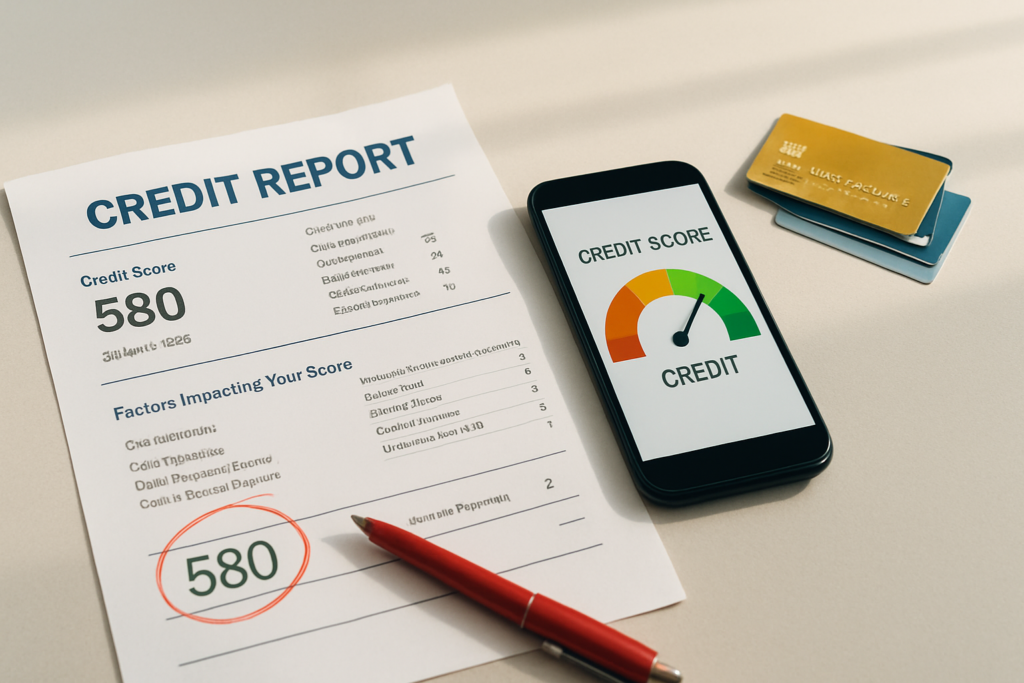
Here’s something almost nobody tells you before they miss a credit card payment: the higher your credit score, the harder you fall. A single 30-day late payment on a 720 score doesn’t just nick it — it can crater it by 60 to 110 points according to FICO’s published research on score impact. The same missed payment on a 580 score? Maybe 20 to 30 points. The credit scoring system punishes people who have the most to lose. That’s the math, and it’s worth understanding before you assume missing one payment is no big deal.
Most Americans with scores in the 700s have worked years to get there. A score around 720 sits solidly in the "good" tier — it qualifies you for most loans, decent interest rates, and doesn’t trigger automatic denials. It’s a real financial asset. And it’s more fragile than people realize.
What Actually Happens When You Miss a Payment
First: lenders don’t report a late payment to the credit bureaus the moment you miss your due date. They report it when it reaches 30 days past due. So if your payment was due on the 1st and you pay it on the 18th, you’re late — you’ll almost certainly get hit with a late fee — but nothing gets reported to Equifax, Experian, or TransUnion. That’s your actual window to fix it quietly.
Once you hit 30 days past due, the lender reports a derogatory mark. The damage escalates at each new threshold:
- 30 days late: significant drop — 60 to 110 points from a 720 score, based on FICO modeling
- 60 days late: another meaningful hit on top of the 30-day mark
- 90+ days late: severe damage; at this point you’re approaching "serious delinquency" territory and lenders are actively worried
- Charge-off (120–180 days): the lender writes off the debt as a loss — this is near the worst outcome short of bankruptcy, and stays on your report for 7 years
The 30-day mark is the cliff edge. Everything before it is invisible to your credit report. Everything after it compounds.
Why the Drop Is So Much Bigger at 720 Than at 580
This is counterintuitive, but the FICO scoring model is designed this way deliberately. The logic: your credit score is supposed to predict the likelihood of a future delinquency. If you already have a 580 score, you have prior negative marks — the model already knows you’ve had credit problems. One more late payment is somewhat expected.
A 720 score, on the other hand, signals a near-perfect payment history. No missed payments, low balances, established accounts. When that person misses a payment, it’s statistically anomalous — it signals something unusual happening in their financial life. The model treats it as more predictive of future risk, so the penalty is larger.
The irony is real: the cleaner your record, the more any single blemish costs you.
The Real-World Dollar Cost of a Score Drop
Abstract point drops become concrete pretty quickly when you run the math on what a lower score actually costs you in interest.
A 720 score qualifies for near-prime mortgage rates. If that score falls to 630 after a missed payment and you’re buying a home, the difference between a conventional loan at a higher rate versus an FHA loan can run to tens of thousands of dollars over 30 years. On a $285,000 mortgage, moving from a 3.5% rate tier to a 5.0% tier adds roughly $850 per month in interest — over $25,000 in the first five years alone.
For auto loans, the gap is similarly jarring. Going from a 750-range score to a 620-range score on a $35,000 car loan can add $4,000 to $6,000 in total interest over a five-year term — for the exact same car. That’s not a rounding error. That’s a car payment for eight months.
And for credit card balance transfers and new lines of credit, a sub-680 score often means you don’t qualify for the offers that would help you manage debt most efficiently. The window closes.
How Long Does It Actually Stay on Your Report?
Seven years from the date of the original delinquency. That’s the rule. A late payment reported today stays visible to lenders until seven years from now.
But — and this is important — the impact of a late payment fades well before the mark disappears. FICO scoring gives more weight to recent history than old history. A single late payment that happened 4 years ago has a fraction of the impact it had in year one. By year three or four of otherwise spotless behavior, many people see their scores recover significantly even with the mark still visible.
The scoring model sees a pattern, not just a snapshot. Twelve to eighteen months of on-time payments after a single late mark can rebuild a substantial portion of what was lost. This is the recovery playbook: don’t miss another payment, pay down balances if you can, and let time work for you.
The Goodwill Letter: Worth Trying Once
If this was your first late payment ever, or your first in several years, you have one card to play: a goodwill adjustment request.
This is a formal written request to the creditor — not the credit bureau — asking them to remove the late payment mark as a one-time courtesy given your otherwise clean history. Many major lenders have the ability to do this. Many won’t. But some will, and the cost of trying is zero.
Write a brief, polite letter explaining: your account history, what caused the missed payment (medical issue, job disruption, simple oversight), that it’s been resolved, and that you’re requesting a goodwill removal. Keep it factual, not emotional. Send it to the lender’s executive customer service address if you can find it — not the standard dispute address.
This only works once. And it only works if the underlying late payment is accurate — if you actually missed the payment and the lender reported correctly. Goodwill adjustments are a favor, not a dispute process.
What Doesn’t Work: Credit Repair Myths
A few things that won’t fix an accurate late payment:
Disputing it as "inaccurate" when it’s not. If you genuinely missed the payment and the lender reported it correctly, filing a dispute with the bureaus won’t accomplish anything. The lender will verify the information and the dispute will be closed without removal. Disputing accurate information wastes your time and, if done repeatedly, can actually flag your file.
Credit repair companies that promise removal. No company can legally remove accurate negative information. They can dispute inaccurate items — which you can do yourself for free at AnnualCreditReport.com. Save the monthly fee.
Closing the account. Closing a credit card doesn’t remove its history from your report. The account and its history stay on file for years. And closing it can hurt you further by reducing your total available credit, which increases your credit utilization ratio.
The Score Recovery Timeline
Here’s roughly what the research and FICO modeling suggest for recovery from a single 30-day late payment on a 720 score, assuming everything else stays clean:
- Months 1–3: Maximum damage period. Score is at or near its lowest point from the event.
- Months 6–12: Some stabilization as recent on-time payments begin to offset the mark.
- Months 12–24: Meaningful recovery — many people see 30–50 point gains with clean behavior.
- Year 3–4: Score often approaches or returns to pre-miss levels with sustained good habits.
- Year 7: The late payment falls off the report entirely.
The variables that speed recovery: paying balances down (lower utilization = higher score), keeping all other accounts current, and not opening a flurry of new accounts right after the miss (new inquiries add temporary small drops).
Prevention Is Cheaper Than Recovery
The most effective credit protection is also the most obvious: automate your minimum payments. Set up autopay for the minimum due on every credit card and loan. You can always pay more manually — but the autopay prevents the 30-day cliff from being reachable even in a busy or distracted month.
If you’re looking at your score in the 720–750 range and wondering whether pushing toward 800 matters, the short answer is yes — but it matters most as a buffer. The higher your score, the more room you have for a single miss without falling into a different rate tier. A 760 score that drops 80 points lands at 680 — still in most lenders’ acceptable range. A 720 that drops 80 points lands at 640 — now you’re looking at subprime rates on your next auto loan.
To see where you currently stand and track your recovery if you’ve had a recent miss, Experian’s free credit monitoring tool gives you your FICO Score 8 (the most widely used mortgage and auto-loan score) along with the specific factors dragging it down. Check it at Experian.com — no credit card required for the basic free tier.
If you want the full picture of how credit scoring actually works — not the oversimplified version — Your Score by Anthony Davenport is one of the most accurate books on how lenders actually use FICO data, written by someone who worked on the creditor side. And if you’re managing debt alongside credit repair, a practical debt and credit recovery guide can help you sequence the payoff decisions correctly.