Debt and Credit

Learn how credit and debt work both for and against you.

Debt and Credit

How Much More Does a 620 Credit Score Cost vs a 760 on a $300,000 Mortgage Over 30 Years?

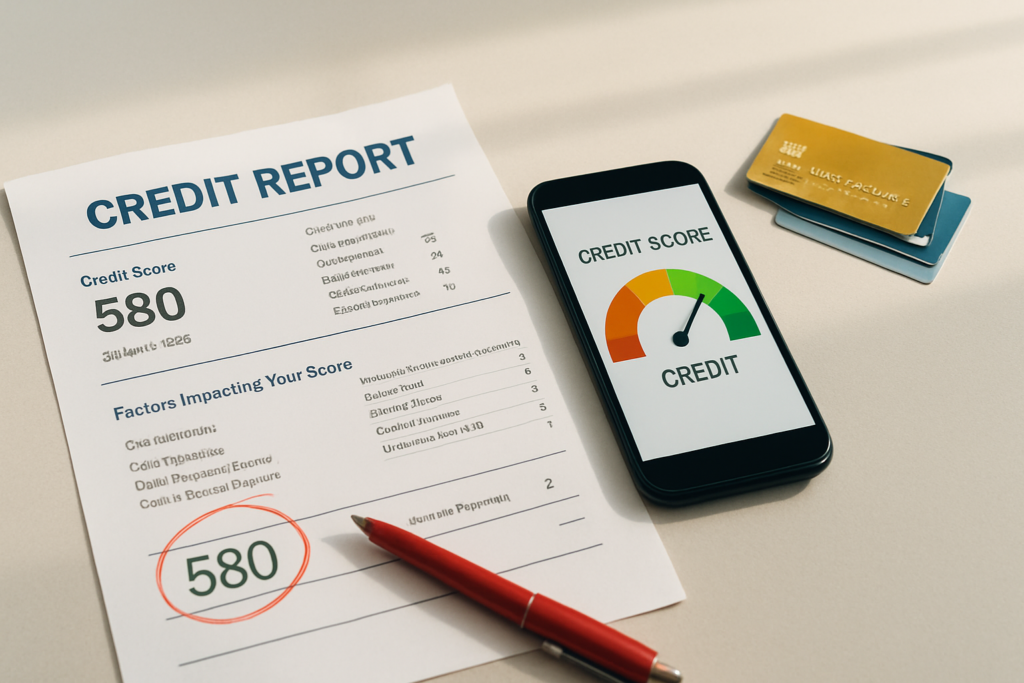
A 760 credit score and a 620 credit score can both get approved for a $300,000 mortgage in today's market. The difference is what you pay for it. At current rates, the gap between a 760 and a 620 score on a 30-year fixed mortgage translates to roughly $469 more per month — and $168,000 more in total payments over the life of the loan. That's not a rounding error. It's a second mortgage on a small house. Here's the full breakdown by loan size, plus the 18-month roadmap to move from 620 to 700+.

Debt and Credit

Should I Convert My $200,000 Traditional IRA to a Roth at 58, and How Much Can I Convert Each Year Without Jumping Tax Brackets?

The years between when you retire and when you start taking Social Security are often the lowest-income years of your adult life — and the best window you'll ever have to convert a traditional IRA to a Roth at a low tax rate. A married couple with no income in the 58-62 window can convert up to $123,500 per year and stay entirely in the 12% bracket. Here's the exact math, the bracket-filling strategy, and why NOT converting could cost you tens of thousands in avoidable taxes after 73.

Debt and Credit

What Does Making Only Minimum Payments on $8,000 of Credit Card Debt at 22% APR Actually Cost You?

Most Americans making minimum payments on credit card debt don't realize they're signing up for a 25-year repayment schedule that will cost them $12,000+ in interest on an $8,000 balance. The minimum payment on $8,000 at 22% APR starts at $160 per month — barely covering the interest. Here's the exact math, the true timeline, and what paying just $100 more per month actually saves you.

Debt and Credit

Should You Cash Out Your 401k to Pay Off $20,000 in Credit Card Debt at 22% APR?

Cashing out your 401k to pay off credit card debt sounds logical — eliminate 22% interest immediately. But the math almost never works out. A 30-year-old who withdraws $20,000 pays $6,400 in immediate penalties and taxes, then loses $200,000+ in future retirement growth. Here's what the numbers actually show, and the alternatives that actually beat a 22% credit card rate.

Debt and Credit

Should I Claim Social Security at 62 or Wait Until 70 If I Have $500,000 Saved and a Paid-Off House?

Claiming Social Security at 62 gives you $1,400/month immediately. Waiting until 70 gives you $2,480/month — $1,080 more per month, forever. The breakeven point is around age 82. If you have $500,000 saved and a paid-off house, the math almost always favors waiting. Here's the exact calculation, the bridge strategy for funding the gap, and the specific scenarios where claiming early actually makes sense.

Debt and Credit

Is a 15-Year Mortgage Worth It If the Payment Is $500/Month More Than a 30-Year on a $300,000 Home?

A 15-year mortgage on a $300,000 home saves roughly $185,000 in total interest compared to a 30-year. Sounds like a no-brainer. But if you invest the $500 monthly difference in index funds instead, you can end up with more total wealth at the end of 30 years than the person who chose the 15-year. Here's the exact math — and who should actually choose which option.

Scroll to Top