Saving Money

How to save more and build wealth

Wide horizontal editorial flat-lay photograph of renters insurance and apartment living items arranged across a light wo
Saving Money

Is Renters Insurance Worth It If Your Apartment Rent Is $1,200/Month?

Renters insurance costs $15 to $20 a month — and most renters skip it. Here’s why that’s a mistake: your landlord’s insurance covers the building, not a single thing you own. This article covers what renters insurance actually protects, the real math on what your belongings are worth, the liability gap most people ignore, and whether it’s worth it for someone paying $1,200/month in rent. (Spoiler: yes, unambiguously.)

Wide horizontal editorial flat-lay photograph of a neatly arranged set of financial planning objects on a clean light-gr
Saving Money

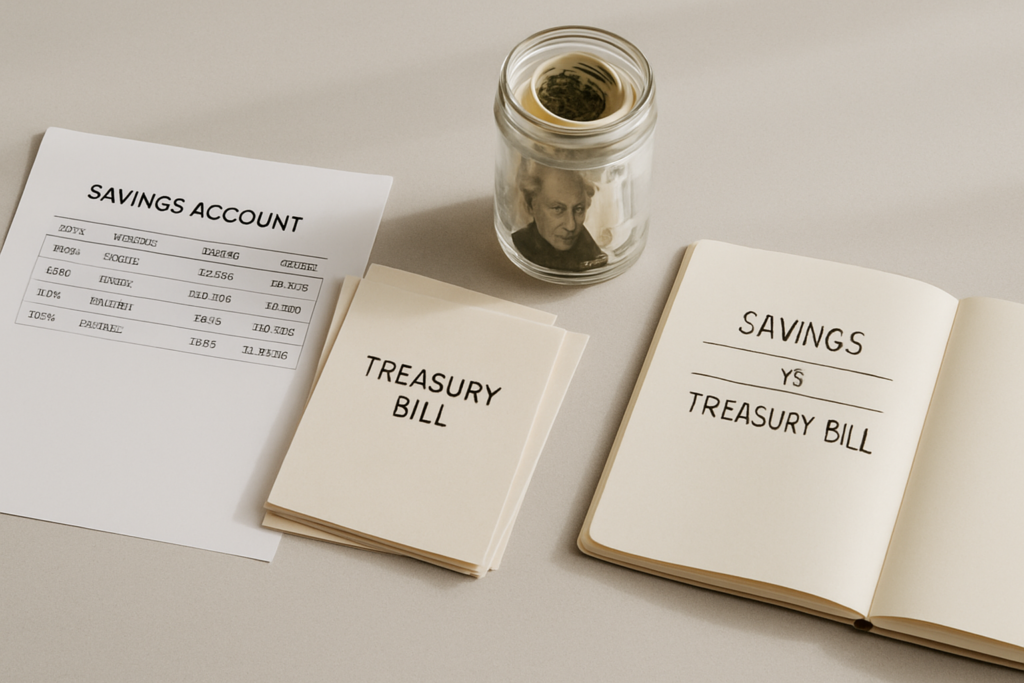
Are T-Bills Better Than a High-Yield Savings Account for a $25,000 Emergency Fund in the 22% Tax Bracket?

Most people pick between T-bills and a high-yield savings account by comparing rates. That’s the wrong comparison — in the 22% bracket, it’s really a state-tax question, and the answer depends entirely on where you live. Here’s the after-tax math on $25,000 and why a government money market fund often wins the three-way comparison outright.

wide horizontal editorial photo, OUTDOOR/ENVIRONMENTAL style, a warm residential neighborhood street viewed from slightl
Saving Money

How Long Does It Take to Save a 20% Down Payment on a $320,000 Home Making $75,000 a Year?

The 20% down payment target on a $320,000 home means saving $64,000 — and at a $75,000 salary, that timeline ranges from 2.5 years (if you save aggressively) to over a decade (if you don’t). Here’s an honest breakdown of the savings math at different monthly contribution rates, whether waiting for 20% actually beats buying now with 5% down and paying PMI, and a five-step savings plan that actually works — including the one move that matters more than any budgeting hack.

Wide horizontal editorial photo of several small labeled glass jars with coins lined up on a bright wood shelf, soft nat
Saving Money

How to Set Up Sinking Funds on a $55,000 Salary So You Never Have to Put a Car Repair or Vacation on a Credit Card Again

The average American with a $55,000 salary pays roughly $300-400 per year in credit card interest on expenses they should have seen coming: car repairs, holiday gifts, a vacation they planned six months out. These aren’t emergencies — they’re predictable. Sinking funds are savings accounts you feed monthly so that when a $900 tire replacement or a $1,200 Christmas gift budget arrives, you pay cash. At a $55,000 salary, $490 per month across six targeted sinking funds covers the most common budget-wrecking expenses — here’s exactly how to set them up.

Scroll to Top