Author name: Real Money Habits Research Desk

The Real Money Habits Research Desk digs into the data, studies, and statistics behind personal finance topics. Our research-driven articles help everyday people worldwide understand the numbers behind smart money decisions — from investment returns to debt payoff strategies.

Wide horizontal editorial flat-lay of paperwork and a pen on a bright light desk, soft natural light, no people, no text
Debt and Credit

Is Debt Settlement Worth It? How Settling a $12,000 Credit Card Debt for Less Damages Your Credit Score for 7 Years — and What the Tax Bill Looks Like

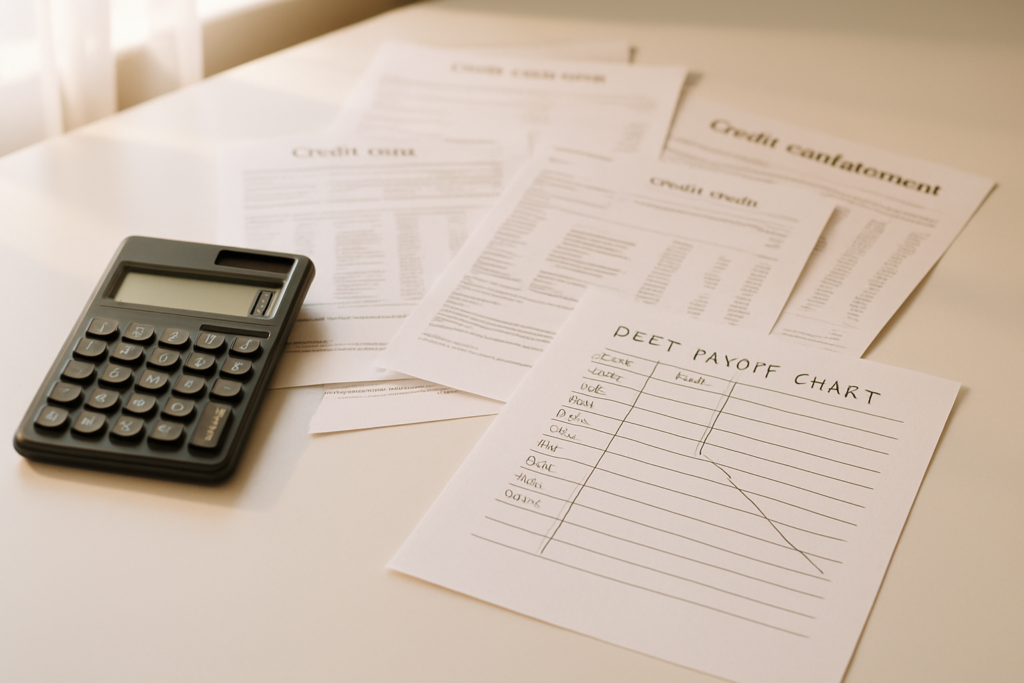
Settling a $12,000 credit card debt for $6,000 sounds like a $6,000 win. The actual math is more complicated. The IRS considers the forgiven $6,000 taxable income, adding $1,320 in federal taxes at a 22% rate. A settlement company charges 15-25% of the enrolled balance ($1,800-$3,000 in fees). Your credit score sustains significant damage starting the day you stop making payments — damage that sits on your report for 7 years. And the settled account shows "settled for less than full amount," not "paid in full," which affects future mortgage approvals and rental applications for years afterward. Sometimes settlement is still the right call. Here's when it is and when it isn't.

Wide horizontal photo of an attractive well-kept suburban home with a covered porch, bright sunny daytime, clean landsca
Debt and Credit

Should You Pay Points to Buy Down Your Mortgage Rate? The Break-Even Math at 7.25% vs 6.75% on a $350,000 Loan

Paying 2 discount points to buy your mortgage rate down from 7.25% to 6.75% on a $350,000 loan costs $7,000 upfront and saves $118 per month. The break-even point is 59 months — roughly 5 years. If you stay in the home longer than 5 years, buying the points saves you money. If you move, refinance, or sell before then, you've overpaid. This sounds straightforward, but there's a refinancing wildcard, an opportunity cost question, and a "temporary buydown vs permanent points" distinction that changes the math significantly. Here's how to run the calculation for your actual situation.

Wide horizontal photo of a modern, late-model sedan parked in a bright sunny driveway of an attractive home, clean dayli
Debt and Credit

Should I Refinance My Car Loan From 7.9% to 5.5%? The Break-Even Math on a $25,000 Balance and When It’s Actually Worth the Paperwork

Refinancing a car loan from 7.9% to 5.5% on a $25,000 balance with 48 months remaining saves approximately $27/month and $1,308 in total interest over the life of the loan. The break-even on refinancing fees — typically $75 or less for an auto loan — is under 3 months. Unlike mortgage refinancing, there's no appraisal, no closing costs, and no points. For most people who got a car loan in 2022-2023 when rates spiked and now have improved credit or better rate options, refinancing takes about 20 minutes online and the math strongly favors doing it. The one trap to avoid: extending the loan term for a lower payment that ends up costing more in total interest.

Wide horizontal editorial photo of a single credit card being cut in half with scissors on a bright light surface, soft
Debt and Credit

What Actually Happens to Your Credit Score When You Cancel a Credit Card You’ve Had for 10 Years?

Canceling a credit card you no longer use sounds like responsible financial hygiene. In practice, it can drop your credit score by 10-40 points depending on your specific credit profile — and the damage from canceling a 10-year-old card with a large credit limit is often larger and longer-lasting than people expect. The effects hit two of the five FICO score factors simultaneously: credit utilization (30% of your score) and average age of accounts (15%). Here's the exact math, when canceling is actually fine, and what most people should do instead.

Wide horizontal editorial flat-lay of a credit card statement and a calculator on a bright light desk, soft natural ligh
Debt and Credit

Is a 0% Balance Transfer Card Worth the 3-5% Fee on $10,000 in Credit Card Debt? The Break-Even Math Most People Skip

The standard balance transfer fee is 3-5% of the amount transferred. On $10,000 of credit card debt, that's $300-$500 you pay upfront to move your balance to a 0% promotional APR card. Most people wonder whether that fee is worth it. The answer — almost always yes, if your current card charges 20%+ APR — becomes clear when you calculate how much interest you're paying per month right now. At 22% APR, $10,000 costs you $183/month in interest alone. The transfer fee pays for itself in under two months. The real question isn't whether to do a balance transfer. It's whether you have a plan to pay off the balance before the promotional period ends.

Wide horizontal photo of a modern front door with a small welcome mat on a sunlit porch, bright cheerful daylight, no pe
Debt and Credit

Why Your Credit Karma Score Is Different From the Score Your Mortgage Lender Sees — and What the Gap Costs You at the Bank

Credit Karma shows 742. Your mortgage lender pulls 701. The loan officer explains — correctly — that the lender uses a different scoring model. You get the loan, but at a higher rate tier than you expected. The 41-point gap between the score you checked this morning and the score the bank used just added $87/month to your mortgage payment for 30 years. This is not a bug or a mistake. It’s the predictable result of checking a VantageScore when your lender uses FICO — two different mathematical models with different weightings that produce meaningfully different numbers for approximately 25% of consumers.

Wide horizontal photo of home renovation tools and paint swatches laid out on a bright sunny porch, warm cheerful light,
Debt and Credit

Personal Loan, HELOC, or 0% APR Credit Card: The True Cost of Financing a $15,000 Home Renovation at Today’s Rates

A $15,000 home renovation — new HVAC, kitchen appliances, bathroom remodel — financed the right way costs $0 to $1,372 in interest. Financed the wrong way for your situation, it costs $5,664. The three main options (personal loan, HELOC, and 0% APR credit card) each win in a specific scenario, and each is the wrong choice in others. Here’s the complete total cost comparison at 2024 rates, broken down by credit score range and payoff timeline.

Wide horizontal photo of a modern, late-model sedan parked in a bright sunny driveway of an attractive home, clean dayli
Debt and Credit

Is Leasing or Buying a $35,000 Car the Better Financial Decision? The True 5-Year Cost Comparison Most Dealers Don’t Show You

Leasing a $35,000 car looks like the smarter move when the monthly payment is $395 vs $554 to buy it. But that comparison omits the mileage penalty most Americans will trigger, the disposition fee at lease end, the perpetual payment cycle with zero equity, and what happens when you hold a purchased car past the loan payoff date. Here's the full 8-year total cost math for leasing vs buying a $35,000 car — including the break-even point where buying becomes the clear financial winner.

Wide horizontal photo of an attractive well-kept suburban home with a covered porch, bright sunny daytime, clean landsca
Debt and Credit

Should I Use My Extra $600/Month to Pay Off $40,000 in Student Loans at 6.5% or Save for a House Down Payment?

A 28-year-old with $40,000 in student loans at 6.54% and $15,000 already saved toward a $250,000 house faces one of the most common financial forks in the road: accelerate student loan payoff or build the down payment? The math produces three distinct strategies with outcomes that differ by $28,000 in total cost over 10 years. The right answer depends on your local home prices, your PMI estimate, and one question most people forget to ask: what happens to the student loan if you lose your job?

Wide horizontal photo of a modern front door with a small welcome mat on a sunlit porch, bright cheerful daylight, no pe
Debt and Credit

How Much Does PMI Cost Per Month on a $350,000 Home With 5% Down, and When Does It Actually Cancel?

On a $350,000 home with 5% down and a 740 credit score, private mortgage insurance adds approximately $140-160 per month to your payment — and at normal amortization on a 7% mortgage, you'll pay it for roughly 10-11 years before the loan balance naturally reaches 80% of the original purchase price. But most homeowners don't know they can request cancellation the moment home appreciation pushes their equity to 20%, and many eliminate PMI 4-6 years early by doing exactly that. Here's the full cost breakdown and the formal cancellation playbook.

Scroll to Top