Debt and Credit

Learn how credit and debt work both for and against you.

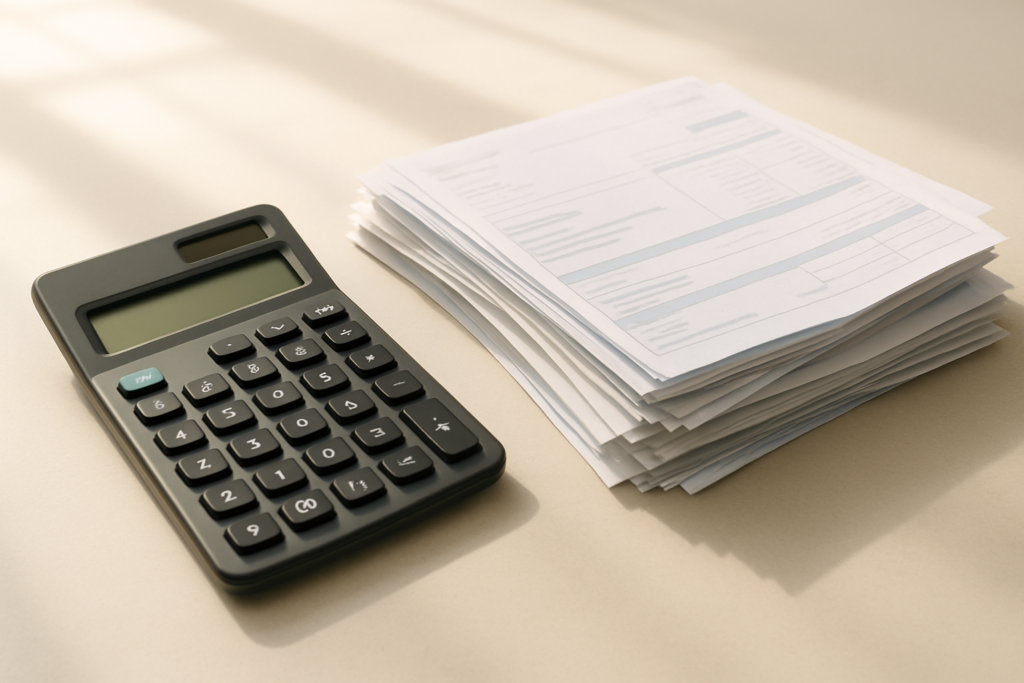
Wide horizontal editorial flat-lay of a stack of unpaid bills next to a calculator on a bright light desk, soft natural
Debt and Credit

What Does Making Only Minimum Payments on $8,000 of Credit Card Debt at 22% APR Actually Cost You?

Most Americans making minimum payments on credit card debt don't realize they're signing up for a 25-year repayment schedule that will cost them $12,000+ in interest on an $8,000 balance. The minimum payment on $8,000 at 22% APR starts at $160 per month — barely covering the interest. Here's the exact math, the true timeline, and what paying just $100 more per month actually saves you.


Wide horizontal editorial photo of a glass jar of coins next to a cut credit card on a bright light desk, soft natural l
Debt and Credit

Should You Cash Out Your 401k to Pay Off $20,000 in Credit Card Debt at 22% APR?

Cashing out your 401k to pay off credit card debt sounds logical — eliminate 22% interest immediately. But the math almost never works out. A 30-year-old who withdraws $20,000 pays $6,400 in immediate penalties and taxes, then loses $200,000+ in future retirement growth. Here's what the numbers actually show, and the alternatives that actually beat a 22% credit card rate.

Wide horizontal photo of a modern front door with a small welcome mat on a sunlit porch, bright cheerful daylight, no pe
Debt and Credit

Should I Claim Social Security at 62 or Wait Until 70 If I Have $500,000 Saved and a Paid-Off House?

Claiming Social Security at 62 gives you $1,400/month immediately. Waiting until 70 gives you $2,480/month — $1,080 more per month, forever. The breakeven point is around age 82. If you have $500,000 saved and a paid-off house, the math almost always favors waiting. Here's the exact calculation, the bridge strategy for funding the gap, and the specific scenarios where claiming early actually makes sense.

Wide horizontal photo of a modern front door with a small welcome mat on a sunlit porch, bright cheerful daylight, no pe
Debt and Credit

Is a 15-Year Mortgage Worth It If the Payment Is $500/Month More Than a 30-Year on a $300,000 Home?

A 15-year mortgage on a $300,000 home saves roughly $185,000 in total interest compared to a 30-year. Sounds like a no-brainer. But if you invest the $500 monthly difference in index funds instead, you can end up with more total wealth at the end of 30 years than the person who chose the 15-year. Here's the exact math — and who should actually choose which option.

Scroll to Top